Andorra may be the way to Europe by Arab investors
Andorra, United Arab Emirates, an economic bridge feasible. 41 years old, married with two children. His company, Global Overseas Partners, is leading to a possible Arab mana. Today (12 h) gave a talk to the local EAA.
He knows that when it comes to money in the world that people like you get plates eyes.
There is a certain mythology that exaggerated.
Yes?
Ten to thirty or forty years the Arabs are rich, and maybe throw money at first but now some days not. Rich people are advised to dominate the environment in which they want to invest. You could say that were new rich are rich, and now advised.
In the photo we see a Saudi prince and two friends.
I directed a few years attracting investors and the Emirates have also taken part in many operations from there to here.
The power of petrodollars.
This is another mistake. Not everything comes from oil. In Dubai represents only 3 percent of GDP.
And then?
There are taxes, and this has become a hub of interest to investors worldwide.
You really believe in an economic bridge between Andorra and the Emirates?
Firmly. Andorra can be a gateway to Europe for Arab investors from the Middle East.
There have been others. Why we would be more attractive?
Make no mistake: investors are always looking for the best fiscal conditions, and that your country can be very attractive. Think, as I said, that the Arabs are not used to paying taxes. In addition, you have the advantage of the environment. The calm with which they live, the anonymity which moves people, that may go unnoticed … All that we seek investors. Dubai has it and Andorra, as well.
Taxation. I guess I know what we have and what we have: be suitable to be competitive?
Andorra should be regularized taxation with Europe is the price to pay for not being considered a tax haven. Is what you are doing and are doing well. The question, however, is to be the lowest in Europe and conditions that employers have to work with any country in the world, this is key.
I do not say even a single problem, and it should not be all that easy.
Communications. It is essential that you have at least a heliport. Large investors do not want to catch a plane and then drive three hours, recently came with me said that.
He speaks as if he were working on the issue.
I’m doing that is because a few days ago.
How long this process?
About ten years but can be better in five. You need this change in thinking to provide opportunities for future generations.

Attract Arab investors in government hands
Andorra is a stranger in the UAE. It is as much of Europe.
Therefore, what is needed is directly transmitted to the Government of the Federation of Investors Arab kingdoms which the country can offer advantages compared to other European countries and became the Principality in the door of their business on the continent. This was said yesterday for our businessman and consultant in a conference with thirty entrepreneurs gathered at the headquarters of the Business Federation (CEA). He believes that the government has a work room, reported the tax advantages Andorra has to offer compared to other European countries, and especially close permanently within the tax and the maximum number of double taxation agreements with non-EU states.
“In Dubai there are zero taxes, and when they see what level they are in Europe they get the creeps,” said the Catalan businessman, who added that the distinctive Andorran regarding taxation has for investors to capitalize on the UAE “use the Principality as a gateway to Europe.” He stressed the need to close the fiscal framework and CDI as soon as possible because “when you say that you are working you will say when you call them over.”
Aside from selling tax benefits, Vidal urged entrepreneurs to work on improving communications to attract investors. Andorra urgently needs a boost airport or heliport headquarters because “once you are in Barcelona you can not tell them to do three hours by car to reach the Principality.”
The consultant based in Dubai also invited them to be entrepreneurs who invest in the UAE. “It’s a great opportunity to enter a market that opens the door around Africa and Asia,” said Vidal, who noted that these markets is easier to do business from Dubai than from their countries origin. Also encouraged to set up companies in the Arab federation for “large facilities” that gives the local government to foreign investors. Vidal spoke many opportunities in the fields of energy, construction, automotive, technology and tourism. “They’re rich Russians in Andorra? Go to Dubai and see what the Russians are rich! “He exclaimed.
GO TO DUBAI Yes, but advised
Our businessman and consultant, who is also the ambassador of CEA in the UAE, invited entrepreneurs to open businesses in the area but do always well advised to take full advantage. The consultant explained that in Dubai, for example, there are classified as zones that allow the investor owning 100% of the company. Remember that outside these areas is essential that 51% of the shares are a national. He also highlighted the fact as opportunities in the local currency peg with the U.S. dollar and the fact that companies can repatriate the money at zero cost.
The United Arab regret that Andorra is poorly communicated
The director of the office of the UAE investments in Spain said yesterday that Andorra is considered a good place to invest, but poor communications are a disadvantage. As strengths, in addition to the tax, it should be noted security, tranquility and nature, but that required three hours of road to get there is an important tradeoff. So the president of the CEA, Xavier Altima reminded of the need to promote a heliport or airport headquarters, as reported by the ANA.
The entrepreneur and consultant made these reflections in the context of the conference offered Monday to Business Confederation Andorra Andorra to target employers who are interested in the UAE and performed under the objective of the CEA attracting foreign investment and help entrepreneurs who want to internationalize Andorra.
COMMITMENT TO ENVIRONMENT ATTRACTIVE / Vidal said yesterday that Andorra can be especially attractive to investors for its taxation that can turn it into an interesting point for any investor who wants to invest in Europe. In addition, however, Vidal believes that the principality could be like Dubai, which has a commitment to promote an attractive environment for investors to remain there, and added a point could be promoting peace, Safety and investors who like nature and Andorra have.
The main disadvantage, however, is poor communication. Vidal said that “we can not ask an investor to go to Barcelona or Toulouse then do two or three hour drive.”
In this sense, the chairman of the CEA, Xavier Altima recalled that the need for the heliport is very important and in the meantime perhaps we need to explore other avenues such as Airport of La Seu d’Urgell. Altimir said that “they are people who are used to moving very fast, your time is worth a lot of money,” and therefore can not miss the opportunity to come to a lack of good communication.
An emerging market / regard to the appeal may be the UAE for entrepreneurs who want to internationalize Andorra, Vidal said that it is an emerging market with great future and that can be very interesting for entrepreneurs Andorra. Indicated that it is expanding as there are several areas that may be of interest, such as tourism, energy, automotive, or technology sector.

Emirates NBD extends operations to China
The opening of the Beijing office is part of Emirates NBD’s international expansion strategy, and is the bank’s first office in China. It will serve as a liaison point to facilitate and better serve the bank’s clients in their business activities in the world’s most-populous nation and in the high-growth Middle East region.
Emirates NBD (National Bank of Dubai) announced on Tuesday the opening of its Beijing representative office, underlining its commitment to China and the Gulf Cooperation Council (GCC) countries that seek to expand their footprint across all markets where Emirates NBD has operations.
Emirates NBD’s Beijing representative office was officially inaugurated by Vice Chairman Hesham Abdullah Al Qasim, in the presence of senior bank management, including Rick Pudner, Chief Executive Officer; Mohammad Hamad Al Shehi, Board Director and James Wu, China Representative, Emirates NBD. The opening ceremony was attended by senior government officials from China and the UAE, business leaders, industry decision-makers and media.
“Over the last decade, China has emerged as one of the Gulf’s most important trade partners, both as a leading energy importer and as the world’s largest exporter. Indeed, the Chinese business base in the UAE has witnessed considerable expansion, giving rise to a sizeable Chinese business and resident community,” said Al Qasim. “We believe this is the opportune time to expand our banking operations into China, and create a liaison point to support businesses operating in these two key markets.”
Recent studies estimate that trade between the UAE and China has increased 35 per cent annually during the last decade. Both China’s exports to the UAE and its petroleum imports from the country are set to grow further over the next few years, making China one of UAE’s top three trade partners.
Al Qasim also highlighted the significance of Beijing as the launch location for Emirates NBD in China, saying: “China has been leading global economic growth for more than a decade. As the nation’s capital, the home of central government, and headquarters for the state owned financial services and business sectors, Beijing is unquestionably the appropriate location for Emirates NBD to establish its footprint in this dynamic, internationally leading country.”
“Growing trade between the GCC states and China has underlined the need for efficient and speedy cross-border financial services, and we are committed to developing and supporting businesses both in China and our home region by leveraging our links in all the markets in which we operate,” said Rick Pudner.
Source of information: Gulf News.

Companies that place greater importance on ICTs are leading the way towards growth
According to a report by Penteo and ESADE, growth rates are higher at companies where the CIO is included in the highest decision-making bodies.
Penteo and ESADE recently presented the second edition of their joint report, Information Technologies at Spanish Companies, which rigorously analyses the situation of ICT management and governance and the ICT main trends in Spanish companies in 2012.
The report describes a strong correlation between the inclusion of the chief information officer (CIO) on the management committee, on the one hand, and the company’s ability to grow in times of crisis and satisfaction with IT spending, on the other. Among companies that include the CIO in the highest decision-making bodies, the percentage that are experiencing growth is twice the across-the-board average. Likewise, a company is six times more likely to be satisfied with its IT investments if its CIO sits on the management committee. The reasons are obvious: companies that keep their CIOs in the decision-making loop are more convinced of the importance of ICTs; therefore, they view investments in technology more favourably. Additionally, when the CIO is on the management committee, he or she is more involved in strategic decisions and can propose initiatives proactively and more diligently. Despite this, just 17.9% of CIOs sit on their companies’ management committee, and this figure has fallen considerably over the past few years.
In the current recession, many companies have postponed investment and growth initiatives and made further budget cuts. These measures have obviously forced ICT departments to once again tighten their belts. For the report Information Technologies at Spanish Companies, over a hundred CIOs and 56 chief executives from Spanish companies were interviewed. The report examines the companies’ ICT priorities in 2012 and looks at how ICT departments are dealing with budgetary constraints.
The report analyses the economic context in which the interviews were conducted and compares it with data obtained from 2010 and 2011. The top executives interviewed are shown to be pessimistic about the economy in which their companies will be competing over the next 12 months; they have therefore made IT budget cuts a priority for 2013.
The top executives were also asked about their CIOs’ best contributions to the struggle against the economic crisis. The report finds that CEOs believe that their CIOs have helped increase process efficiency while containing IT costs. In other words, they have done more with less, thereby helping their companies to reduce their operating costs. Nearly twice as many CEOs as in 2011 reported that IT had helped to reduce costs. In contrast, barely any CEOs (4%) mentioned the involvement of IT in business transformation or in creating and marketing new products and services. Company leaders are generally satisfied with the performance of their IT departments during the crisis, but they view this contribution as mainly tactical.
A process of change is taking place at all levels. The ICT industry, no stranger to this period of innovation, is facing an “industrial revolution” that will affect both ICT service providers their clients’ ICT departments. ICT staff at end companies will de-prioritise provision to instead focus on innovation and business co-creation.
This period of innovation is also characterised by hyperconnectivity: access to digital technology has become more democratic and the sheer volume of information – which people want to be accessible from anywhere – is multiplying at a growing pace.
The report also analyses the main technological macrotrends that have arisen from this hyperconnectivity – cloud computing, big data, “smart” everything, and mobility and user autonomy (“bring your own device”) – and how these trends are disrupting both ICT departments and suppliers.
The report notes that the money previously allocated for hardware and software purchases – accounting for 60-70% of ICT budgets – can instead, in a game-changing shift, be spent on use-based cloud computing services.
Similarly, the report describes the impact of big data: the enormous growth in the volume, complexity, diversity, and speed of data, especially the proliferation of data from social networks.
“Consumerisation” is the term used in the report to describe how corporate users increasingly tend to use their own devices at work (“bring your own device”). This major trend is challenging information-system directors rethink company policies on security, integration, device maintenance, etc.
The report also touches on the “smart” everything trend, calling it one of the clearest illustrations of hyperconnectivity and one of the highest-potential areas for innovation in new business models and services.
The report ends with an analysis of the CIO role, in particular the ways in which CIOs can transcend technology to become business leaders. The report also notes, however, that CIOs are the “technology champions” of their companies and that, especially in today’s fast-changing world, they must act as technology radar, innovation generator and new-growth-opportunity detector.
This new role, “CIO 2.0″, comprises traditional responsibilities in addition to the creation of new revenue streams. In short, today’s CIOs must use their influence to transform their companies by means of co-creative innovation with other areas.
Read more: : Informe Penteo & ESADE (Spanish)
Source of information: ESADE News.

UAE jumps in global ranking
The UAE became the only Arab country to be included in the Global Economics driven by Innovation – the third and the most advanced stage of competitiveness in the Global Competitiveness Report 2012-13 released by the World Economic Forum on Wednesday.
The Global Competitiveness Report however ranked the UAE 24th out of 144 countries globally—an improvement of three ranks from last year and ahead of countries such as Australia, New Zealand and Spain.
Classified as an innovation-driven economy the UAE placed alongside countries such as the United States, Japan, Germany, Singapore, and has held been classified as innovation-driven for seven consecutive years—the only Arab country with this distinction.
An innovation-driven economy is the most advanced stage of development a country can achieve within the Global Competitiveness Index framework. To be classified as such, a country must have a very high level of income per capita along with sufficient economic diversification. Countries in the innovation-driven stage, sustain higher wages and standards of living, and their businesses are able to compete through innovation–producing new and different goods and services using sophisticated design, production, management, financing and commercialization processes.
In the report the UAE ranked among the top 10 nations globally in the following pillars of the report: Infrastructure (8th), Macroeconomic environment (7th), Goods Market Efficiency (5th) and Labour Market Efficiency (7th), and among the top 20 for Institutions (12th) and Business Sophistication (15th).
Commenting on UAE’s positive results Reem Al-Hashimy, Minister of State and Chairwoman of the Emirates Competitiveness Council, noted that it reflects the government’s endeavors to diversify the economy and create a robust business environment that enables creativity and entrepreneurship to be translated into innovative goods and services. She lauded all levels of government that she noted were “working concertedly to put in place the framework-the policies and the institutions—for an economy that relies increasingly on innovation for sustained growth, enhancing competitiveness.”
She attributed the UAE’s rapid economic progress to the country’s visionary leadership, stressing their “on-going commitment and dedication to achieving the UAE’s Vision 2021 to become a diversified, knowledge-driven economy that is among the most competitive in the world.”
Continued government investment in education, knowledge industries, reforms and improvements to the business environment for laying the groundwork for country’s sustained competitiveness and prosperity in a global economy driven by knowledge and creativity.
Source of information: Gulfnews.

Technologies will suppose more than 2,000 job creation
Catalonia captures the interest of international groups for TIC sector, that plan to invest at least 168 million euros to install offices and R & D centers, and shared services.
A total of fourteen international companies in the world of technology have announced in recent months the launch of centers and facilities in Barcelona, Lleida and other Catalan cities.
Read more (Spanish).
Source of information: Expansión. (Spanish)

Dubai offers Dh72m fee exemption to SMEs
Dubai SME, the agency of the Department of Economic Development (DED) in Dubai, yesterday announced that it is offering its members a fee exemption of more than Dh72 million.
Small and medium entrepreneurs (SMEs) will not be charged more than a Dh1000 annually during the first three years of business in Dubai,” Abdul Baset Al Janahi, CEO of Dubai SME, said.
This move seeks to encourage SMEs to focus on growing their enterprises without cost concerns.
“With the discounted fee, we are offering another wide window of opportunity for our SME members. Entrepreneurs can now launch their business with confidence, knowing that government fees will not be burden on their business plan or operations,” Al Janahi said.
This initiative will help Dubai SME’s members to save Dh20,000 per year on an average, that is Dh60,00 in the three years,” Al Janahi said.
Eliminating the labour security deposit together with the additional licensing fee, SME owners will save around 90 per cent of fee costs as well as from 10 to 20 per cent of their capital along three years, he added.
Abdul Aziz Al Mazam, Senior Manager, Business Start-up & Development at Dubai SME, said the flat fee exempts SME businesses from various charges payable otherwise to government authorities including the DED, Dubai Municipality and Civil Defence as well as the Dubai Chamber of Commerce & Industry.
“For example, Dubai Municipality levies a 5 per cent fee on rent from all businesses. Considering that rent in certain areas in Dubai is quite high, the flat rate presents a huge saving in this respect alone,” he said.
Dubai SME has also reached an agreement with Tecom, Union Cooperative Society and Aswaaq to offer a 20 per cent discount on rents to Dubai SME members. Additionally, Dubai SME members are exempted from the Dh3,000 payable as bank guarantee for every employee hired as per an agreement signed with the Ministry of Labour.
“There are 5,000 people employed by Dubai SME members and the bank guarantee exemption means another saving of Dh15 million for these SMEs. We are trying to open the world of business and enterprise as wide as possible and cutting down cost of licensing and hiring will encourage entrepreneurs while also complementing the efforts to enhance Dubai’s global rankings in the ease of doing business,” said Al Mazam.
Jitendra Gianchandani, Chairman of Jitendra consulting group, told Gulf News; “It’s worthwhile discount to SMEs members, no doubt about it, waiver of market fees or flat fees and deposits to various government, is decent amount.”
“It will ease the burden on the SMEs. However as SMEs members represent only 1200 members, which is almost negligible compare to total SMEs operating in Dubai .Hence such discount should be extended to other firms who are established since more than decade and never had any fine or labour dispute, to encourage them and create healthy atmosphere in the country”
Source of information: Gulfnews.
Dar Al Tawasel predicts increased business opportunities across the UAE
Dar Al Tawasel, one of the leading business logistics and consultancy companies in the UAE, predicts an upturn in the next six months in terms of the creation of business opportunities across the region. Dar Al Tawasel, which translates to ‘House of Connections’, is based in Dubai and specialises in opening up the UAE’s markets to potential investors, allowing companies to thrive on the opportunities presented to them by its buoyant economy.
The organisation helps make connections and enables lasting business relationships between the Emirates and foreign investors. Key services include business partnerships, office support, development and project management, master planning and urban design, corporate social responsibility, delegation management and VIP services.
HH Sheikh Juma Bin Maktoum Al Maktoum, Chairman of Dar Al Tawasel, said: “We anticipate a strong six months ahead as we approach the end of 2012. This year has seen steady and encouraging growth in certain sectors across the UAE and we expect this trend to continue. We are helping to create a facilitative environment for expanding businesses and investors alike and we have seen an upturn in the number of enquiries of late and anticipate the growth in opportunities in the next six months.”
Mr Feras Al Dahlan, Chief Executive Officer of Dar Al Tawasel added “Our organisation enables effective communication between companies and cultures, providing invaluable information to companies looking to set up in the UAE. With over 15 years experience in the region, we have evolved our services for a truly international marketplace to offer the best in the region.”
Dar Al Tawasel recently appointed 5 international representatives in strategic locations across the globe; Germany, United Kingdom, China, South Korea and Australia in order to manage the growing demand of inquiries from foreign investors looking to establish in the UAE.
Source of information: Zawya.

New rules for domestic and foreign investment funds in the UAE
Regulatory experts from the international law firm Clifford Chance have reviewed the eagerly awaited Investment Funds Regulation (Regulation) which has been implemented by the UAE Securities and Commodities Authority (SCA) this week. The Regulation applies to all matters relating to domestic investment funds and to the promotion and offering of foreign funds in the UAE, with particular implications for DIFC funds or funds marketed by DIFC firms.
The Regulation transfers regulatory responsibility for the licensing and marketing of investment funds and for a number of related activities from the UAE Central Bank to the SCA.
The Regulation prohibits an entity from establishing a domestic investment fund without first obtaining approval from the SCA. The Regulation further details requirements with respect to domestic funds’ offering documents and investment policies, and contains provisions regarding the subscription, trading and redemption of fund units. The roles and obligations of a fund’s services providers, specifically the fund’s investment manager, management services company and custodian, are also prescribed.
All foreign funds made available to investors in the UAE need to be approved by the SCA and offered through a locally licensed placement agent or, in limited circumstances, a locally established representative office.
In order to promote a fund to the public in the UAE, the foreign fund must be regulated and permitted to make a public offer in its home state.
Unregulated, non-retail foreign funds can be offered in the UAE by way of “private placement”. Approval of the SCA is still required and minimum subscription amounts of AED500,000 (in respect of foreign funds) and AED 1 million (in respect of foreign funds incorporated in free zones outside of the UAE) apply.
Irrespective of whether the units of foreign funds are offered publicly or by way of private placement, all offerings must be made through a locally licensed placement agent. Where foreign funds are offered by way of private placement, the offer can be made through a locally established representative office of the fund company, provided the offer is limited to institutional investors; and (ii) a minimum subscription amount of AED 10 million per subscriber is applied. This is likely to be of limited use in practice.
The absence of a full exemption (including an exemption from the SCA approval requirements) for foreign non-retail funds marketed on a cross-border basis, may cause many foreign firms offering funds in the UAE to change their business model and practices. Currently foreign firms engage in a limited amount of cross-border business with non-retail investors in the UAE consistent with practice to date tolerated by the UAE Central Bank.
The DIFC markets itself as “an ideal platform for raising, deploying and managing capital across the region”. Indeed, many foreign firms have chosen the DIFC as their base for accessing the Middle East market. These firms may find that the DIFC no longer provides the gateway to the UAE market the way it once did.
The DIFC has also dedicated time and resources to creating a legislative and regulatory regime designed to support and establish a secure environment for the growth of the funds industry. The classification of funds established in the DIFC as “foreign funds” for the purposes of the Regulation may detrimentally affect the growth of the DIFC as a funds centre and inadvertently give competitive advantage to similar free zones, such as the Qatar Financial Centre situated in Doha.
Tim Plews, Clifford Chance Partner, believes that “the implementation of the Investment Funds Regulation is likely to come with renewed calls for some form of passporting arrangement or other special treatment for DIFC funds or funds marketed by DIFC firms. In the meantime, firms established in the DIFC may be weighing up the advantages and disadvantages of opening up an additional establishment onshore in the UAE. Indeed, some sector specific firms may relocate permanently from the DIFC.”
Source of information: Zawya.

Dubai issues license to 1,542 new firms
The number of trade licenses issued by the Department of Economic Development (DED) in May 2012 reached 1,542, an increase of 14 per cent over the same period in 2011.
The tourism sector accounted for the highest increase in number of licenses (57 per cent) followed by the professional (19 per cent) and commercial (13 per cent) sectors.
The rise in the number of licenses indicates a higher level of interest in commercial and professional activities among businessmen and investors in Dubai. Commercial licenses accounted for 73 per cent of the total licenses issued last month, followed by professional (25 per cent), industrial and tourism (1 per cent each) licenses.
The total number of licenses amended in May 2012 was 5,728, a two per cent increase over the same period in 2011, while the total number of business registration and licensing (BRL) transactions reached 54,286, compared to 44,492 in May 2011, an increase of 22 per cent.
The number of reserved trade names reached 6,010 in May 2012, a 37 per cent increase compared to the same period in 2011, while the number of initial approvals reached 2,733, a 26 per cent increase year on year.
The total number of commercial activities licensed in May 2012 was 4,042, with General trade leading the list of the top 10 licensed activities (174 licences) followed by Dyes & paints (141 licenses); Tiling of floors and walls (138); Carpentry and flooring (133); Sanitary extensions & wares (132), and Installation of air conditioning systems, ventilation and air purification (128).
The number of professional activities licensed in May 2011 reached 1092 with Residences & building cleaning services leading the list of the top 10 licensed activities in this category with 77 licences, followed by Restaurants, Sewing and Cafes.
In the tourism sector, Inbound tourism was the leader with 13 licenses, followed by Travel agent (7), Tourism consultations & entertainment (2) and Accredited airline general service agent (one license).
In the industrial activities segment, Schools and hospitals furniture, Home furniture, Office furniture, and Turning workshop led the list of licensed activities with two licenses each followed by Industrial manufacturing of chemical compounds, Switches & electrical controls, Perfumes, Cosmetics, Raw plastics, and Metal for building construction.
Source: 24/7 Emirates staff.
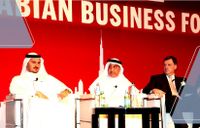
Al Mansouri invites Spanish Businesses to invest in UAE
UAE Economy Minister Sultan bin Saeed Al Mansouri has showcased the economic fundamentals and features of the investment environment of the UAE in front of Spanish officials on the sidelines of his visit to Barcelona.
This came during a meeting organised by the Chamber of Commerce and Industry of Barcelona in the presence of its president, Miquel Valls, and a number of senior officials from both the public and private sectors.
In his presentation, Al Mansouri shed light on the investment and economic environments in the UAE, presenting the most prominent sectors of the economy that can achieve successful investment partnerships between the two countries.
He emphasised the historic trade and diplomatic relations and friendship between the UAE and Spain, where the UAE is Spain’s gateway to the Middle East and North Africa region, where trade rates have grown in the last 10 years, reaching $8.3 billion.
He also highlighted the economic policies of the UAE that focus on diversification and openness highlighting a number of vital economic sectors in the UAE in which it can be good platform for common investment projects with the Spanish side, such as aviation, tourism, hospitality, retail, industry, oil and gas, renewable energy, financial services, logistics and education.
Al Mansouri stressed the fact that the investment environment in the UAE is supported by security, political stability and world-class infrastructure. This in addition to strategic location of the UAE as a global trade hub which provides access to all regional and global markets, in addition to the effective laws and regulations that protect investments and low taxation and exempted tax income. He also shed the light on the ability of the national economy to achieve growth even under regional and global conditions.
Source: www.khaleejtimes.com and www.menafn.com (Middle East North Africa. Financial Network)
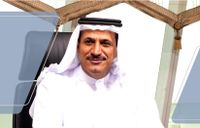
UAE Investment Map sets strategic direction for foreign investments to the UAE
His Excellency Engineer Sultan Bin Saeed Al Mansoori, UAE Minister of Economy, said the UAE Investment Map, which will officially be launched in November 2011, will set the strategic direction of investments in the country.
He said the initiative comes in line with the Ministry’s commitment to drive the economic development of the UAE through vital projects that contribute to the enhancing the overall competitiveness of the economy.
Mr Al Mansoori said the Investment Map is being implemented by the Ministry in cooperation and partnership with Dar Al Tawasol, a UAE national company that will provide provide strategic and technical support for the project as part of a long-term plan of 84 months until 2018.
He said the key objective of the project is to promote investment opportunities in the UAE by highlighting the advantages and incentives of investing in the country across various high growth sectors.
Mr Al Mansoori said the Ministry will adopt an executive programme to drive projects that will provide sufficient and relevant data on the UAE investment environment and the various sectors that are ideal for foreign investments.
He said the Investment Map project will further strengthen the pillars of the knowledge based economy – a priority for the Ministry. Nearly 92% of the Ministry’s services are currently handled electronically and it is expected to rise to 95% by the end of the year by working with other local departments. The Minister reiterated the importance of strengthening awareness on the concepts of knowledge economy and the need to drive innovation across all economic sectors.
Firas Dahlan, Executive Director of Dar Al Tawasol, said that the company would set up four offices in four countries in the first stage to highlight information on various projects implemented in the UAE and promote them.
He added that the company has undertaken a comprehensive study on the investment opportunities in the UAE for the countries falling under the Investment Map and will target major international companies and global investors.
Nada Al Hashimi, Director of Investment Management at the Ministry, said that the first phase of the Investment Map focuses on 11 countries in Asia, Europe and South America, and the Ministry will work in collaboration with Dar Al Tawasol to open representative offices initially in Britain, Italy, Spain and South Korea. She explained that there is coordination at the federal level with commercial representation offices to promote investments in the countries that have been identified.
She said that as the first part of the implementation of the plan a website that provides comprehensive information on the UAE will be launched, where each Emirate can furnish data on investment opportunities. The data will then be analyzed and will help identify the strength of each emirate.
She said that meetings with commercial affairs representatives at embassies operating in the UAE will be held to explain the Investment Map apart from official visits to countries identified for promoting UAE’s investment environment.
Investment Map set to open four offices
Dubai: The UAE Investment Map, a project announced by the Ministry of Economy last month, is set to open four offices in Britain, Italy, Spain and South Korea.
“Investment Map, which will officially be launched in November 2011, will set the strategic direction of investments in the country,” said Sultan Bin Saeed Al Mansouri, Minister of Economy.
“The initiative comes in line with the ministry’s commitment to drive the economic development of the UAE through vital projects that contribute to enhancing the overall competitiveness of the economy.”
The Investment Map is being implemented by the ministry in partnership with Dar Al Tawasol, a UAE national company that will provide strategic and technical support for the project as part of a long-term agreement until 2018.
Knowledge-based
The federal initiative is part of the UAE Vision 2021 to drive the development of a knowledge-based economy.
To achieve the Vision, the Federal Government Strategy 2011-2013 has set strategic directions, including the participation of UAE nationals and developing their capabilities; increasing efficiency, flexibility and productivity in the labour market.
“The initiative will promote the sustainable and balanced development of the UAE, and contribute to GDP growth by stimulating the investment environment, reducing dependence on oil by diversifying revenue streams,” said Mohammad Ahmad Bin Abdul Aziz Al Shehi, Director General of the Ministry of Economy, when announcing the project last month.
Key objective
The key objective of the project is to promote investment opportunities by highlighting the advantages and incentives of investing in the UAE across various high growth sectors.
“The ministry will adopt an executive programme to drive projects that will provide sufficient and relevant data on the UAE investment environment and the various sectors that are ideal for foreign investments,” said Al Mansouri.
Projects
Dar Al Tawasol is planning to set up four offices in four countries in the first stage to promote projects implemented in the UAE.
“The company has undertaken a comprehensive study of the investment opportunities in the UAE for the countries falling under the Investment Map and will target major international companies and global investors,” said Firas Dahlan, Executive Director of Dar Al Tawasol.
First phase
The first phase of the Investment Map focuses on 11 countries in Asia, Europe and South America, and the ministry will work in collaboration with Dar Al Tawasol to open representative offices initially in Britain, Italy, Spain and South Korea.
“There is coordination at the federal level with commercial representation offices to promote investments in the countries that have been identified,” said Nada Al Hashemi, Director of Investment Management at the ministry.
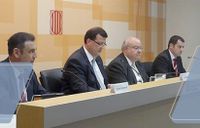
Altran wins a batch of the Generalitat informatics technology contest valued in 37,37 M€.
The informatics contest just has the first winners. Business and Employment department reveled last Friday 27th July the winners of the first two large lots that amounted almost one million Euros. In the next weeks, will have been awarded the remaining allocations, reaching 2.300 million Euros. Multinational companies have obtained the biggest assignments: around 70% of total.
The Governing Council of Telecommunications and Information Technology Centre (CTTI), chaired by Business and Employment Minister, F. Xavier Mena, as the responsible agent for the recruitment, management and provision of TIC solutions in all Catalonia, approved the award of 15 lots (see lots and quotes) for two of the four competitive dialogues contest for the new TIC model of the Government, specifically the contracts referring to the provision and maintenance of applications and the provision of workplace and user support.
After chairing the Government Council meeting of CCTI, appointed to Business and Employment department, the Business and Employment Minister, Francesc Xavier Mena, accompanied by Business and Employment General Director, Enric Colet, and by Telecommunications and Society of Information General Director, Carles Flamerich, and by the Managing Director of CTTI, Jordi Escalé, has announced the award.
When the Minister F. Xavier Mena appeared in court has reiterated that this new model has three general objectives: the Government modernization and its business and citizens relations, to save money, and to offer support and dynamize the business sector and new technologies in Catalonia, according to technology improvement criteria, efficiency budgetary and transversal governance defined in 2011-2012 Government Plan and in Digital Government Plan for Catalan digital society development.
In this context, the Minister noted that they are doing what the President order: “With this contest, companies, institutions and the Administration will do more with less, allowing savings around a minimum of 25% of the bill the Government has paid since now”.
Nevertheless, he wanted to point also that “We haven’t made the award just with economy and saving criteria, but we have establish a new methodology that allows us to evaluate industrial projects and therefore, we have consider the best project criteria”.
Source of information: El País, and e-Notícies Journal.

UAE aims to attract $100b investment in clean energy
Dubai: The UAE government wants to attract $100 billion (Dh367 billion) worth of investment in alternative and sustainable energy projects by 2020.
Feras Dahlan, CEO of Dar Al Tawasol and First Deputy Chairman of the Organising Committee for the Investment Map Conference (IMC), told Gulf News yesterday that eco-projects including bio-fuel production and alternative energy are already underway in the emirates.
He added that the UAE government wanted to boost investment in clean energy technology over the next five years. A seven-year investment development plan is also in place.
Dahlan said that the IMC will open four offices in the UK, Italy, Spain and South Korea to attend to investors and developers and let them know about the UAE, its regulations, laws and investment opportunities.
“We will work hard to attract investors from China, South Korea, the UK, Italy, Spain, the US, Argentina, Brazil, Russia and other countries which would be interested in launching projects in the country,” said Dahlan.
Ecological balance
“With this expansion in the world, the IMC seeks to achieve ecological balance and sustainable development, to strengthen the UAE’s position regionally, to encourage national economic reforms, to gain international exposure, to raise GDP and to promote employment development.”
IMC Director said that the UAE is a conducive place for investment due to its free zones and political stability.
“The IMC aims to reduce the dependence on oil by diversifying revenue streams and investing in other sectors such as sustainable development and alternative energy projects, tourism, heavy industries, infrastructure, metals, construction and water,” said Vidal.
He told Gulf News that there are no guarantees that projects will be shared equally across the seven emirates.
“Each emirate will inform the IMC about its projects and its plans in order to help the IMC promote for them for foreign investors. Yet there is no guarantee that they will be equally distributed among the seven emirates as each emirate has its own plans and ventures,” said Vidal.
He added that the IMC will be facing two major challenges while promoting investment opportunities.
“There are seven emirates, which means different emirates and different strategies. This will make it hard for us to convince investors that we are working together under one umbrella. The second challenge will be to prepare the information that will be posted on the website in order to help investors to have easy access to them to answer their queries about investment in the UAE,” Vidal said.
In November, the UAE Investment Map will be officially launched during the UAE’s Investment Map conference, alongside a specialised exhibition to introduce government services to key international investors.